

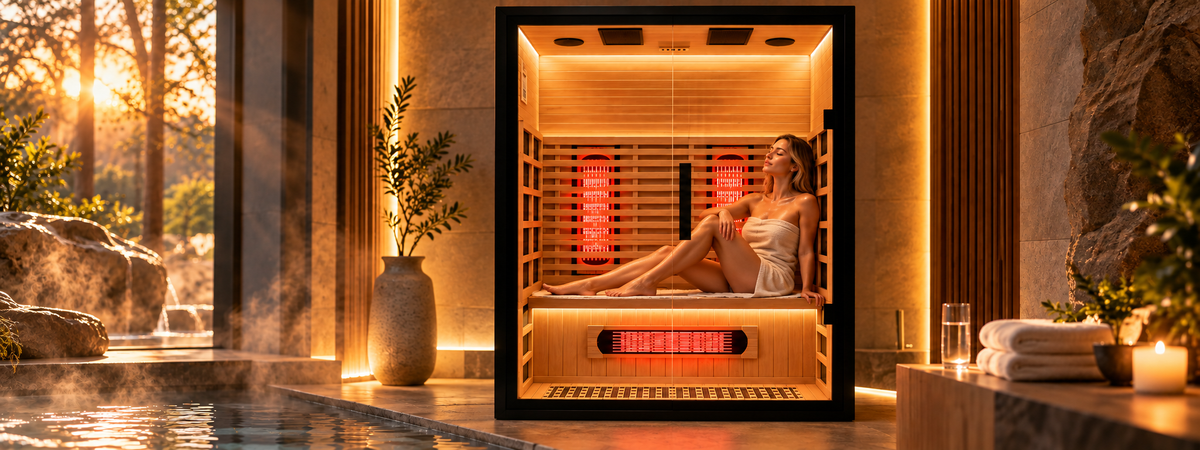
How Much Does an Infrared Sauna Cost? (2026 Price Guide)
"How much does an infrared sauna cost?" is the most common question in home sauna buying, and the most misleading one. Because the honest answer is a range so wide it's almost meaningless on its own: $150 to $15,000+.
A $150 portable tent and a $12,000 premium cabin are both technically "infrared saunas," but they share about as much in common as a tricycle and a truck. So the real question isn't "how much" — it's "how much for what, and what will it actually cost me over the next ten years?"
This guide breaks the price down by format, size, and hidden cost — using real September–October 2026 figures from Amazon, eBay, and brand stores — then walks through the per-session math so you can decide whether it's genuinely worth it.

The Honest Price Range, in One Table
Here's the full landscape, from cheapest to most expensive:
|
Format |
Typical price |
Who it's for |
|
Portable tent / blanket |
|
Renters, testers, tight budgets |
|
1-person wood cabin |
|
Solo users, small spaces |
|
2-person wood cabin |
|
Couples, home gyms — the mainstream |
|
3–4 person cabin |
|
Families, frequent users |
|
Premium / full-spectrum |
|
Daily users, health-focused buyers |
|
Custom / built-in |
|
High-end home installations |
Most buyers land in the 2-person, 1,500–4,500 band — which is exactly where the biggest differences in what you get per dollar live.

Price by Format: What Each Tier Actually Buys
The sub-$600 tier: portable tents and blankets
For 150–600 you get a fabric tent or blanket with basic far-infrared elements and a folding chair. Your head stays outside the heat, so a meaningful part of your body never absorbs infrared at all. These are a low-commitment way to try heat therapy — not a substitute for a real cabin. They also tend to be where "detox" and "weight-loss" marketing hype concentrates hardest.
The 800–2,500 tier: budget wood cabins
Real wooden boxes (usually hemlock) with carbon or ceramic panels. At this price, the wood is typically thin (¾-inch panels), the EMF figures are usually self-reported rather than third-party verified, and warranties run short — often 1–5 years. They work, but they're built to a price point. Independent reviewers who test 40+ saunas are blunt: " most sub-$2,000 models aren't truly low EMF."
The 2,500–4,500 tier: the quality middle
This is where the spec sheet starts to matter. You should expect Grade-A (knot-free) wood, third-party-verified EMF figures, carbon heaters with proper full-body coverage, and longer warranties. The YardSauna Forest series sits here — 2-person at $4,288 with certified Ultra-Low EMF carbon heaters and 100% Grade-A Canadian Hemlock as standard. This is the band where the extra spend buys verification and durability, not just cosmetics.
The $4,500+ tier: premium and full-spectrum
Sunlighten (5,599+), Clearlight (7,399+), and similar. You're paying for full-spectrum (near + mid + far infrared), thicker construction, brand reputation, and sometimes red light therapy — though notably, red light is often a paid add-on even at this price. Whether full-spectrum is worth the premium is a genuine debate; far infrared alone is what most research actually uses.
The $15,000+ tier: custom builds
If you're renovating a basement or building a dedicated wellness room, custom saunas run 15,000–80,000+. This is a different category entirely — architectural, built-in, sized to your space.
Price by Size: 1, 2, or 3+ Person
Size is the single biggest price driver, adding roughly 1,000–1,500 per extra person of capacity:
|
Size |
Typical price |
Electrical |
Notes |
|
1-person |
|
120V/15A |
Plug-in, most flexible |
|
2-person |
|
120V/15A |
The sweet spot for most homes |
|
3–4 person |
|
240V |
Needs a dedicated circuit |
The YardSauna Forest line: 1-person $3,298 · 2-person $4,288 · 3-person $4,978.
One counterintuitive finding worth knowing: independent buyer communities consistently report that people regret buying too small, not too big — not to fit more people, but because a bigger interior is more comfortable and gets used more often. That said, size up only if you have the floor space; a bigger cabin also costs more to heat.

The Hidden Costs Nobody Puts on the Sticker
The sticker price is rarely the whole story. Here's what gets added after checkout:
1. Electrical work — 150–500+
Most 1–2 person infrared saunas plug into a standard outlet (120V), but they should be on a dedicated circuit. Larger 3+ person units often need 240V, which means a licensed electrician and possibly a permit. Budget 150–500 depending on your panel and local labor rates — and check this before you order, not after the crate arrives.
2. Delivery — $0 to $600
Many brands offer free curbside shipping; others charge 150–600 freight. "Curbside" means it's dropped at the curb — getting a 300–400 lb crate into your basement is your job. Inside delivery ("white glove") can add 150–300 more.
3. Assembly — free (DIY) or 200–400
Most flat-pack saunas take two people 2–4 hours with basic tools. If you'd rather not, expect to pay a handyman 200–400. (Some designs are dramatically easier than others — worth checking assembly videos before you buy.)
4. Running cost — under $10/month
The good news: infrared is cheap to run. A typical 2-person unit draws 1,600–2,400W, so a 45-minute session costs 0.16–0.23. Even daily use adds well under $10/month — one of the most economical wellness habits you can install at home.
5. Maintenance — near zero
Infrared saunas are low-maintenance: no chimney, no water, no drainage. Occasional wiping down and keeping the wood dry is about it. This is a meaningful long-term advantage over traditional saunas.

What Actually Drives the Price (So You Can Judge Fairly)
When two saunas look identical but cost $2,000 apart, here's what the difference usually is:
|
Factor |
Budget tier |
Quality tier |
|
Wood grade |
Grade-B/C, knots, thin panels |
Grade-A, knot-free, thicker |
|
EMF |
Self-reported "low EMF" |
Third-party verified figures |
|
Heaters |
Fewer, poorly placed |
Carbon, full-body coverage |
|
Warranty |
1–5 years |
7+ years, covers heaters |
|
Build |
¾" panels |
1.5–2" wall assembly |
The rule of thumb: if a brand can't show you a specific, third-party-verified EMF number, assume it's unverified — that's often the single biggest hidden downgrade in budget saunas.
Is It Worth It? The Real Per-Session Math
This is the calculation most buyers never do, and it changes everything.
A single visit to a spa or infrared studio runs 30–60. If you use a sauna 3 times a week (the dose the research actually supports), that's:
-
Spa/studio:
30–60 × 156 sessions/year =4,680–9,360 per year
-
Home sauna: ~
0.20 × 156 sessions/year =31 per year in electricity
Even a $4,288 home sauna pays for itself against a studio habit in well under a year — and it's available at 6 a.m. or 10 p.m. without a commute, booking, or shared sweat.
The honest caveat, stated plainly: a sauna is only worth it if you actually use it. That's why the quality of the heater and the wood matter more than the sticker price — a sauna you dread using, or one that breaks down, delivers none of this math. A slightly more expensive sauna you use four times a week for a decade is cheaper per session than a bargain one you abandon after six months.

How to Get the Best Price
- Buy in the off-season. Sauna sales cluster around Black Friday, Memorial Day, and July 4th — typical discounts of 15–25% on major brands.
- Watch for bundle deals. Many brands include accessories (backrests, hats, robes) or free shipping during promos.
- Weigh total cost, not sticker. A "cheaper" unit that needs a $500 electrical upgrade and $400 white-glove delivery may cost more all-in than a better unit that's plug-and-play with free shipping.
Five Mistakes That Make You Overpay
Mistake #1: Judging by sticker price alone
The cheapest option often isn't cheapest once you add electrical work, delivery, assembly, and — critically — the risk of a sauna you stop using. Price the total cost of ownership, not the tag.
Mistake #2: Buying a "low EMF" label with no number
If the spec sheet doesn't show a third-party-verified figure, you may be paying for a claim, not a feature. This is the most common silent downgrade in budget saunas.
Mistake #3: Buying too small to save money
Buyers who downsize to save a few hundred dollars are the ones who most often report regret. Comfort drives frequency, and frequency is what makes the investment pay off.
Mistake #4: Ignoring the electrical requirement until delivery day
A surprise 300–500 circuit install — or, worse, a sauna that trips your breaker — is entirely avoidable. Confirm your panel and outlet situation before you buy.
Mistake #5: Paying a premium for full-spectrum without knowing why
Full-spectrum adds near- and mid-infrared wavelengths at a 1,500–3,000 premium. The core benefits most people want come from far infrared. Buy full-spectrum because you specifically want those wavelengths — not because a sales page told you it's "better."
Frequently Asked Questions
How much does an infrared sauna cost in 2026?
The honest range is $150 to $15,000+. A portable tent is 150–600; a quality 2-person wood cabin (the mainstream choice) runs 1,500–4,500; premium full-spectrum units run 4,500–12,000+; custom builds go 15,000–80,000+.
How much does a 2-person infrared sauna cost?
Typically 1,500–4,500 for a solid far-infrared model. Budget Amazon units sit at the low end (800–2,300) but usually have unverified EMF figures and thinner wood; the quality middle is 2,500–4,500; premium full-spectrum 2-person units run $5,000+.
How much does it cost to run an infrared sauna?
Very little. A 45-minute session draws 1,600–2,400W and costs 0.16–0.23 in electricity. Even daily use adds under $10/month.
Do I need to hire an electrician?
Often, yes. Most 1–2 person units plug into a standard 120V outlet but should be on a dedicated circuit; 3+ person units usually need 240V. Budget 150–500 for electrical work, and check local permit requirements.
What hidden costs should I budget for?
Electrical (150–500), delivery (0–600, or more for inside delivery), and assembly (200–400 if you hire help). Running cost is negligible, and infrared saunas need almost no maintenance.
Why is one $1,500 sauna and another $4,500 when they look the same?
The difference is usually wood grade, EMF verification, heater coverage, and warranty. Budget units use Grade-B wood, self-reported EMF, and thin panels; quality units use Grade-A wood, third-party-verified EMF, and full-body heater coverage.
What's the cheapest way to try infrared?
A portable tent or blanket (150–600). Just know your head stays outside the heat, so it's a taste of heat therapy — not the full cabin experience.
Is an infrared sauna worth the money?
Against a spa or studio habit, almost always: at 3 sessions/week, a studio runs 4,680–9,360/year versus ~$31/year in home electricity. The honest caveat is that it's only worth it if you'll actually use it — which is why quality matters more than the sticker.
Which brand is the best value?
It depends on budget. Under $2,000, budget brands trade verification and durability for price. In the $2,500–4,500 quality middle, you should expect Grade-A wood and certified EMF — which is where the YardSauna Forest series (3,298–$4,978) sits. Above $5,000, you're paying for full-spectrum and brand.
When is the best time to buy?
Black Friday, Memorial Day, and July 4th typically bring 15–25% discounts. Off-season is generally cheaper than the winter wellness rush.
Do I need a building permit?
The sauna itself usually doesn't, but a new dedicated electrical circuit often does. Your electrician can handle this — just don't be surprised by it on delivery day.
How long does an infrared sauna last?
A quality unit with Grade-A wood and solid heaters should last 10+ years with minimal maintenance. Cheaper units with thin wood and unverified components tend to degrade faster — which is part of why the upfront savings can be illusory.
The Bottom Line
An infrared sauna costs anywhere from $150 to $15,000+, but the number that matters is what you'll pay over ten years — and that depends far more on quality than on the sticker. Budget for the hidden costs (electrical, delivery, assembly), judge brands by verified specs rather than marketing claims, and run the per-session math against a spa habit.
Get those right, and a home sauna isn't an extravagance — it's one of the most cost-effective wellness investments you can make, available every single day.
Ready to see where the Forest series lands? Explore YardSauna Forest — 1, 2, and 3-person far-infrared saunas with certified Ultra-Low EMF carbon heaters and 100% Grade-A Canadian Hemlock, priced in the quality middle. A 2-person Forest at $4,288, used three times a week for ten years, works out to about $2.75 per session — less than a cup of coffee.

More from YardSauna
Browse every guide and update at our resource hub: yardsauna.net
This article is for educational purposes only. Prices are point-in-time figures gathered from public sources in September–October 2026 and may change. Always verify current pricing, electrical requirements, and warranty terms directly with the manufacturer before purchasing.