
Why Some Infrared Saunas Don't Work (and How to Fix It)
I've used infrared saunas that felt transformative — twenty minutes and I'd step out genuinely loose, relaxed, and dripping. And I've used ones where I sat for forty-five minutes in what the display swore was 150°F, only to leave with dry skin and the nagging feeling that I'd just wasted an afternoon in an expensive wooden box.
Same claimed temperature. Completely different result.
If you've ever wondered why your sauna "doesn't seem to do anything" — or why two saunas that both read 150°F feel worlds apart — the answer isn't in the temperature setting. It's in something almost no sauna review talks about: heat delivery. And the good news is, it's fixable.
Quick Verdict
- Why it happens: most cheap saunas read hot on the display but don't actually raise your core body temperature — the thing that produces every benefit.
- What actually matters: heater coverage and placement, not the number on the screen.
- The fix: buy for heat delivery and verified specs — and size it right for how you'll actually use it.

The Real Reason: Heat Delivery, Not Temperature
Here's the single most important thing to understand about infrared saunas, and the thing most buyers — and even most reviews — get wrong:
The temperature on the screen is not measuring your body.
In most infrared saunas, the temperature probe hangs an inch from the ceiling, in the hottest part of the cabin. It reads the air near the top, not the heat actually reaching your skin. That's why two saunas can both claim 150°F and feel completely different — and why a sauna can "look" hot while leaving you lukewarm.
What actually produces the benefits — the elevated heart rate, the deep sweat, the heat shock proteins that drive recovery — is whether your core body temperature rises. And that depends entirely on heat delivery: how much infrared energy actually reaches your body, over how much surface area, and how evenly.
Independent reviewers who have tested 40+ saunas put it bluntly: a sauna with properly positioned heaters produces a better sweat at a lower air temperature than a hotter sauna with poor heater coverage.
Heat coverage beats temperature. Every single time.
The science, in plain English
A quick physics detour that makes the whole "heat delivery" thing click:
"Infrared" isn't one wavelength — it's a family. Near infrared (700–1400 nm) penetrates deeper into tissue because water doesn't absorb it much. Mid infrared (1400–3000 nm) is where light transitions into felt heat. Far infrared (3000 nm and up) is absorbed strongly by water, so it stays near the skin's surface.
Here's the part that surprises most people: "far" infrared doesn't mean "deeper." It's actually the opposite — far infrared is absorbed so well by water that it stays near the skin, while near infrared is the one that penetrates deeper into tissue. Most home saunas are built around far infrared because it's the efficient, comfortable "heat" end of the spectrum.
Why your core temperature is what actually matters. Every sauna benefit — loosened muscles, a calmer nervous system, faster recovery — is triggered by heat shock proteins (HSPs), the body's cellular repair crew. HSPs activate when your core temperature rises enough, not when the air near the ceiling reads 150°F. That's the whole point: a sauna that warms the air but not your body produces a number on a screen — and nothing else.

The Five Signs Your Sauna Isn't Delivering
How do you know if you're sitting in a "warm wooden box" instead of a working infrared sauna? Here are the telltale signs:
- You don't sweat — or only your torso sweats. If your back is wet but your legs and feet are cold and dry, the heaters are positioned for your upper body and missing the lower half entirely.
- You feel hot in patches. Hot spots on one side, cool on the other, means the panels are sparse or poorly placed — you're getting uneven coverage, not full-body heat.
- You stay in "forever" without discomfort. A properly heating sauna makes you want to leave after 20–40 minutes. If you can sit indefinitely without wanting out, your core temperature isn't actually climbing.
- The display says 150°F but the walls feel cool. Infrared heats you, not the air — so cool walls are normal. But if you don't feel deeply warm either, the heat isn't reaching your body.
- You feel "nothing" afterward. No looseness, no calm, no post-session glow. The signature after-effects of a real heat dose are simply absent.
If you recognize two or more of these, the problem isn't you — it's the heat delivery.
Why It Happens: Where Cheap Saunas Cut Corners
When a sauna can't deliver heat properly, it's usually for one of three reasons:
1. Too few heaters, poorly placed
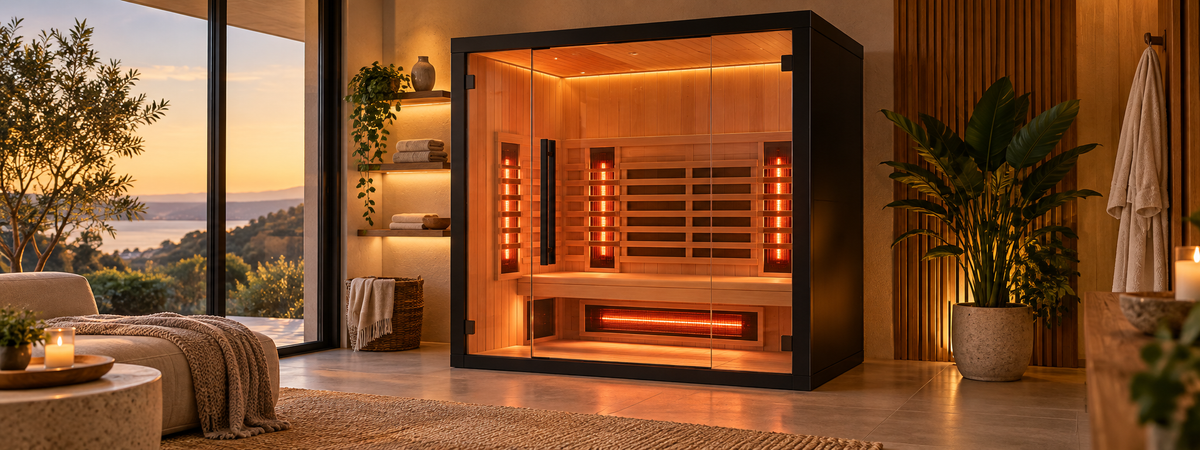
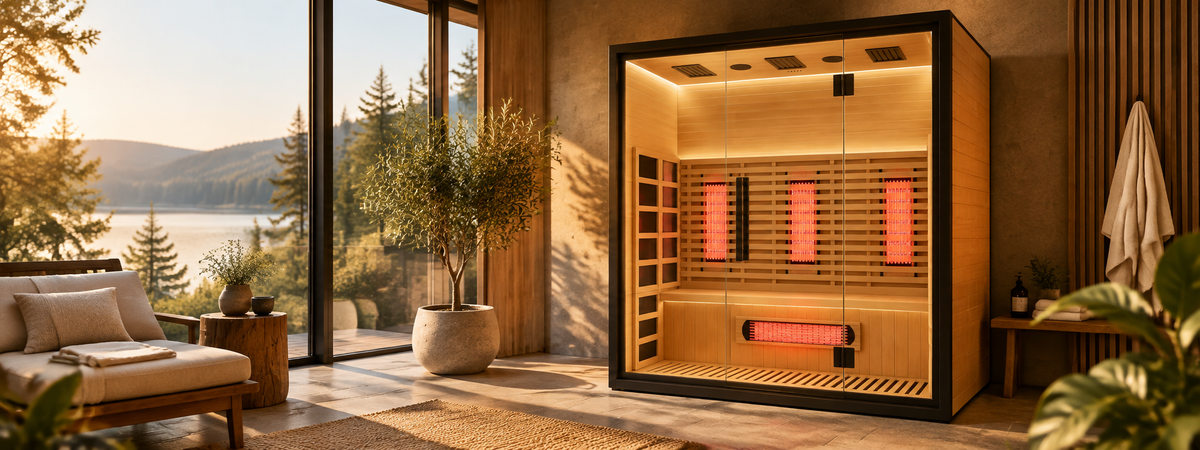
The single biggest culprit. Many budget saunas advertise impressive-sounding specs but skimp where it matters: the number and placement of heating panels. A sauna with heaters only on the back wall will warm your back and leave your front, legs, and feet cold. Real full-body coverage means heaters behind you, beside you, in front of you, and — crucially — under the bench and at calf level.
2. "Low EMF" as a label, not a measurement
"EMF" isn't one thing — it covers magnetic fields (measured in milligauss, mG), electric fields (measured in volts per meter, V/m), and radio frequency (RF). A sauna can look clean on one measurement while still measuring high on another — a budget unit may pass on magnetic fields yet still measure 300–600 V/m of electric field at the seated position. The useful test is whether a brand publishes specific, third-party-verified figures — not just the words "low EMF" with no number. Budget brands almost never do.
3. Thin, low-grade wood
Thin panels don't retain heat well, and low-grade wood with knots warps and degrades across heat cycles. Over a year or two, the cabin stops holding heat the way it did on day one — which is part of why a cheap sauna can feel like it "wears out."

How to Fix It: What Actually Matters
If heat delivery is the problem, the fix is to buy for heat delivery — not for the highest advertised temperature. That means three things:
1. Look for full-body heater coverage
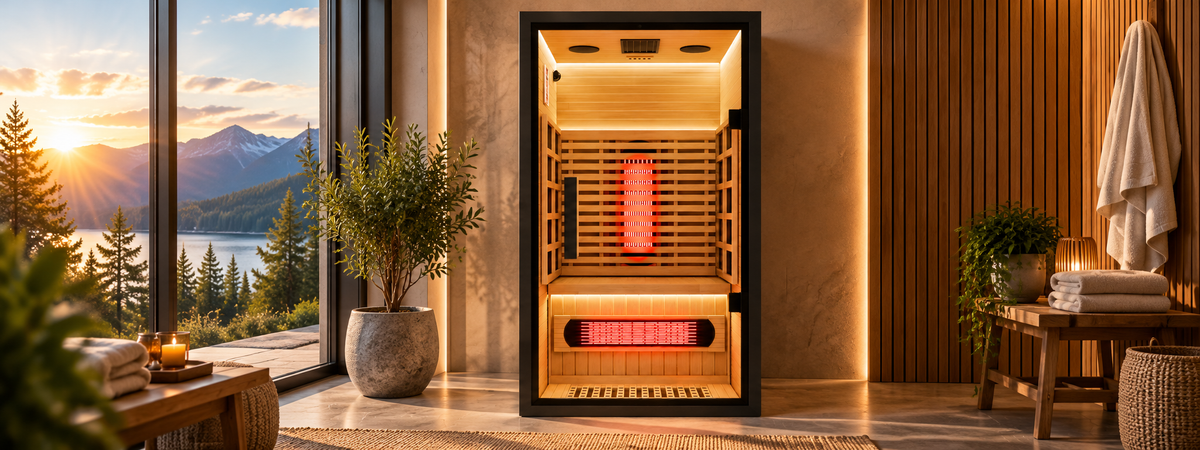
The best saunas surround you — heaters behind, beside, in front, and under the bench. That's the difference between "warm back" and "deep, even heat everywhere." This is exactly why the YardSauna Forest uses a hybrid heating system: rapid-heating full-spectrum quartz elements paired with ultra-low EMF carbon panels. The quartz gets you to temperature fast; the carbon panels deliver the even, deep far-infrared warmth that raises your core temperature.
2. Look for red light therapy done right
An increasing number of saunas advertise "red light" — but many are just a cosmetic 4-watt LED. Real red light therapy (scientifically called photobiomodulation) uses specific clinical wavelengths: 660nm red light targets the skin's surface and supports collagen and circulation, while 850nm near-infrared penetrates deeper to reach muscle and tissue. The Forest integrates both, at the wavelengths most studied for skin rejuvenation and muscle recovery. Done properly, it's a genuine add-on to the heat — not a colored light bulb.

3. Verify the specs, not the claims
A sauna is only worth it if it lasts and delivers. That means Grade-A wood (knot-free, warp-resistant), verified EMF figures, and a brand that stands behind the product. The Forest is built from natural Canadian Hemlock with a tempered safety-glass door — the kind of construction that still holds heat five years in.
Size Matters: Pick the Capacity You'll Actually Use
Even a perfectly heating sauna "doesn't work" if it's the wrong size — because a cramped sauna is one you'll stop using. Here's the sizing you need to know:
|
Capacity |
Dimensions (W×D×H) |
Electrical |
Best for |
|
1-Person |
36" × 36" × 75" |
120V, standard outlet |
Solo daily use, tight spaces |
|
2-Person |
48" × 42" × 75" |
120V, standard outlet |
Couples, or one person who wants to stretch out |
|
3-Person |
60" × 45" × 75" |
240V, dedicated circuit |
Families, dedicated wellness room |
A consistent finding from buyer communities: people regret buying too small, not too big — not to fit more people, but because a roomier interior is more comfortable and gets used more often. The 1-person and 2-person models plug straight into a standard outlet; only the 3-person needs a dedicated 240V circuit.

The Accessories That Make Sessions Actually Work
Sometimes a sauna "doesn't work" simply because the session isn't comfortable enough to repeat. Three small add-ons fix that:
- A wool felt hat shields your head, ears, and hair from the heat, letting you stay in longer — which is how you reach the deeper, longer sessions that actually produce results.
- An ergonomic backrest (S-curve, matching the hemlock) supports your lower back on the bench and protects your heating panels.
- A plush cotton robe makes the post-session cool-down comfortable, so the whole ritual feels worth repeating.
The Forest is available with these as an optional bundle — add none, one, or all three, in a single checkout. Accessories ship right away; the sauna follows after its production window.
Five Mistakes That Keep You From Getting Results
Mistake #1: Chasing the number on the screen
The probe is near the ceiling; your body isn't. Judge a session by whether you sweat and feel warm throughout — not by what the display claims.
Mistake #2: Buying "12 heaters" without asking where they are
Heater count is meaningless without placement. Twelve panels stacked on one wall won't match six panels wrapped around your body. Coverage beats count.
Mistake #3: Assuming "low EMF" without a number
If the spec sheet shows no third-party-verified figure, you're buying a claim, not a feature. Ask for the measurement.
Mistake #4: Buying too small to save money
A cramped sauna is one you'll abandon — and an abandoned sauna delivers zero benefits. Comfort drives frequency, and frequency is everything.
Mistake #5: Treating "red light" as a check-box
A cosmetic red LED isn't red light therapy. Real photobiomodulation uses specific wavelengths (like 660nm and 850nm) at meaningful intensity. Check the actual spec, not the marketing bullet.
Quick Glossary
- Far infrared (FIR): the "heat" end of the infrared spectrum; absorbed by water, so it warms the skin's surface.
- Near infrared (NIR): shorter wavelengths (700–1400 nm) that penetrate deeper into tissue.
- Full spectrum: combines near, mid, and far infrared in one unit.
- Heat delivery: how evenly and deeply heat actually reaches your body — the real determinant of results.
- Core temperature: your internal body temperature; it must rise for the benefits to kick in.
- Heat shock proteins (HSPs): cellular repair molecules activated by heat stress.
- EMF (electromagnetic fields): magnetic fields (mG), electric fields (V/m), and radio frequency.
- Photobiomodulation (PBM): the scientific term for red light therapy.
Frequently Asked Questions
Why does my infrared sauna feel like it's not working?
Almost always, it's heat delivery — the heaters aren't covering your body evenly, so your core temperature never rises enough to trigger the benefits. The display may read hot while your body stays lukewarm. Check heater placement and coverage, not the temperature setting.
Why do my legs and feet stay cold in the sauna?
Because most budget saunas put heaters only on the back and side walls, leaving the lower body uncovered. Look for a sauna with heaters under the bench and at calf level — that's what delivers full-body heat.
Is a higher maximum temperature better?
No. A sauna with well-placed heaters produces a better sweat at a lower temperature than a hotter sauna with poor coverage. Heater coverage beats temperature, every time.
What's the difference between carbon and quartz heaters?
Carbon panels deliver even, deep far-infrared warmth; quartz elements heat up faster. The best saunas — including the YardSauna Forest — combine both in a hybrid system: quartz for speed, carbon for even, deep heat.
Does red light therapy in a sauna actually do anything?
Only if it's real. Genuine red light therapy uses specific clinical wavelengths — 660nm red light and 850nm near-infrared — at meaningful intensity. Many saunas advertising "red light" just have a cosmetic colored LED. Check the actual wavelength.
How do I know if a sauna's "low EMF" claim is real?
Ask for a specific, third-party-verified figure. "EMF" covers magnetic fields, electric fields, and radio frequency — and a sauna can be clean on one while high on another. No number means no verification.
What size infrared sauna should I buy?
If you're the primary user, a 1-person fits solo daily use; a 2-person (48" × 42") is the sweet spot for couples or stretching out; a 3-person suits families. Buyer communities consistently report regretting too-small, not too-big.
Do I need a special electrical setup?
The 1-person and 2-person models plug into a standard 120V outlet. The 3-person model needs a 240V dedicated circuit installed by a licensed electrician. Verify before you order.
What accessories actually improve a sauna session?
A wool hat (stay in longer), an ergonomic backrest (lower-back support), and a robe (comfortable cool-down). These are the three that most directly make sessions more comfortable and repeatable.
How can I tell if I'm getting a real heat dose?
You should sweat deeply, feel warm throughout (including legs and feet), and want to leave after 20–40 minutes. If you can sit indefinitely without discomfort, your core temperature isn't climbing.
Will a sauna that "doesn't work" still give me benefits?
No. Every benefit — cardiovascular, recovery, pain relief — depends on your core temperature rising. A sauna that leaves you lukewarm delivers none of them, no matter how long you sit.
What should I look for to guarantee results?
Full-body heater coverage (back, sides, front, under-bench), verified EMF figures, Grade-A wood, and the right size for your routine. That's the combination that turns a sauna from a warm box into a daily recovery tool.
The Bottom Line
An infrared sauna that "doesn't work" isn't broken — it's just not delivering heat to your body. The number on the screen is a red herring; what matters is heater coverage, verified specs, and the right size for how you'll actually use it. Get those right, and twenty minutes produces the deep sweat, the loosened muscles, and the post-session calm that made you want a sauna in the first place.
Ready to feel the difference real heat delivery makes? Explore the YardSauna Forest — a hybrid full-spectrum + ultra-low EMF carbon heating system with integrated 660nm/850nm red light therapy, in 1, 2, and 3-person sizes, with optional accessories to complete your setup.

More from YardSauna
Browse every guide and update at our resource hub: yardsauna.net
This article is for educational purposes only. Product specifications are current as of October 2026 and may change. Always verify current specs, electrical requirements, and pricing directly on the product page before purchasing.