
Sauna Electricity Requirements: Wiring the YardSauna Forest 3-Person Infrared Sauna
Installing a home infrared sauna is an exciting upgrade for any household, but before you start sweating, you need to understand the electrical demands of your new wellness investment. The YardSauna Forest 3-Person Infrared Sauna is a premium unit that delivers full-spectrum warmth, yet it cannot simply be plugged into a standard wall outlet. Getting the wiring right from the start means safer operation, consistent performance, and no surprises when you flip the switch for your first session.
Understanding Infrared Sauna Electrical Basics
Infrared saunas operate differently from traditional steam saunas. Instead of heating the air around you, infrared panels emit radiant energy that directly warms your body. This method is more energy efficient for the same perceived heat, but it still requires a dedicated electrical circuit because the heating elements draw significant power. Most residential infrared saunas in the United States use either 120V or 240V, depending on their size and heating capacity. A 3-person model like the YardSauna Forest falls into the higher voltage category due to its multiple heating zones and additional features.
Voltage is the electrical pressure that pushes current through a circuit. Standard American homes have 120V outlets for most appliances, but larger equipment such as dryers, ovens, and some saunas need 240V. The YardSauna Forest specifically requires 220V-240V on a dedicated circuit. This is not a suggestion; it is a hard requirement listed in the product specifications. Connecting a 240V sauna to a 120V outlet would not only prevent it from working but could also damage the internal electronics and create a fire hazard.
Amperage is the measure of electrical current flow. The YardSauna Forest does not list a specific amperage in its public specs, but typical 3-person infrared saunas in this class draw between 15 and 30 amps at 240V. To be safe, you should plan for a 20-amp or 30-amp circuit, depending on the exact requirements printed on the sauna's data plate. Always consult the owner's manual and a licensed electrician before finalizing your circuit size. Under-sizing the breaker can cause nuisance tripping, while over-sizing without proper wire gauge can be dangerous.
Voltage and Amperage: The Core Numbers
For the YardSauna Forest, the voltage requirement is explicit: 220V-240V. This means you need a double-pole breaker in your electrical panel, which supplies two hot legs of 120V each. The amperage draw will depend on how many heating elements are active at once. The Forest has a surround full-spectrum heating matrix that includes quartz and carbon panels, plus a wide-format overhead red light and NIR array, and an extended tourmaline floor heater. With all these components running, the total wattage could approach 3,000 to 4,500 watts. At 240V, that translates to roughly 12.5 to 18.75 amps. Therefore, a 20-amp circuit is the minimum safe choice, but a 30-amp circuit provides extra headroom and is often recommended by electricians for saunas of this size.
You should also consider the wire gauge. For a 20-amp circuit at 240V, you need at least 12-gauge copper wire. For a 30-amp circuit, you need 10-gauge copper wire. The distance from your electrical panel to the sauna location also matters. If the run is longer than 50 feet, you may need to upsize the wire to prevent voltage drop, which can reduce heater performance and cause overheating at connections.
Outlet Type and Plug Configuration
The YardSauna Forest does not come with a standard 120V plug. Instead, it is designed to be hardwired directly to a dedicated circuit by a qualified electrician. Hardwiring means the sauna's power cord is connected directly to a junction box or a disconnect switch, with no plug and receptacle. This is the safest and most code-compliant method for a permanent appliance that draws significant current. Some saunas in this class may use a NEMA 6-20 or NEMA 6-30 plug, but the Forest's specifications indicate a dedicated circuit requirement, which typically implies hardwiring. Check the actual unit upon delivery; if it has a plug, you will need a matching 240V outlet. If it has a pigtail, you will need a junction box.
Never use an extension cord or an adapter to connect a 240V sauna to a 120V outlet. Extension cords add resistance, generate heat, and can melt or start a fire. The sauna must be within reach of its dedicated circuit, or you must have an electrician run a new circuit to the desired location. This is a non-negotiable safety rule.
Circuit Breaker Recommendations for the YardSauna Forest
Selecting the correct circuit breaker is critical for protecting both the sauna and your home's wiring. A breaker that is too small will trip frequently, interrupting your sessions and potentially damaging the heating elements through repeated power cycles. A breaker that is too large for the wire gauge will not trip when it should, allowing wires to overheat and possibly cause an electrical fire. For the YardSauna Forest, a double-pole 20-amp breaker is the minimum, but a 30-amp breaker is often the better choice if the manufacturer's data plate allows it.
Here is a simple rule of thumb: the breaker size must be equal to or slightly greater than the sauna's maximum continuous current draw, but never greater than the ampacity of the wire. If the sauna draws 16 amps, a 20-amp breaker with 12-gauge wire is appropriate. If it draws 24 amps, you need a 30-amp breaker with 10-gauge wire. Because the Forest's exact amperage is not published in the product block, you should have your electrician measure the actual load or refer to the nameplate on the sauna once it arrives. Planning for a 30-amp circuit with 10-gauge wire is a safe default that covers most 3-person infrared saunas.
You also need to consider the type of breaker. A standard double-pole breaker is sufficient for a sauna without a ground-fault requirement. However, many local electrical codes now require GFCI protection for any appliance in a potentially wet location, such as a bathroom or basement. Check with your local building department. If GFCI is required, use a double-pole GFCI breaker, which can be expensive but provides essential shock protection. Do not use a single-pole GFCI breaker on a 240V circuit; it will not work correctly.
Dedicated Circuit: Why It Is Non-Negotiable
A dedicated circuit means that nothing else in your home shares that breaker. This is essential for a sauna because the heating elements draw a large, sustained current. If you share the circuit with lights, outlets, or other appliances, the total load could exceed the breaker's rating, causing it to trip. More importantly, sharing a circuit can lead to voltage fluctuations that affect the sauna's digital controls and heating performance. The YardSauna Forest has a digital touch console and Bluetooth audio; these sensitive electronics can malfunction if the voltage dips when another device turns on.
Dedicated circuits also make troubleshooting easier. If the breaker trips, you know exactly which appliance caused it. And because saunas are often used for long periods, a dedicated circuit ensures that the wiring does not overheat from continuous use. The National Electrical Code (NEC) considers a sauna a continuous load if it runs for three hours or more, which means the circuit must be sized at 125% of the sauna's rated current. This is another reason to err on the side of a larger breaker and thicker wire.
How the YardSauna Forest's Heating System Works
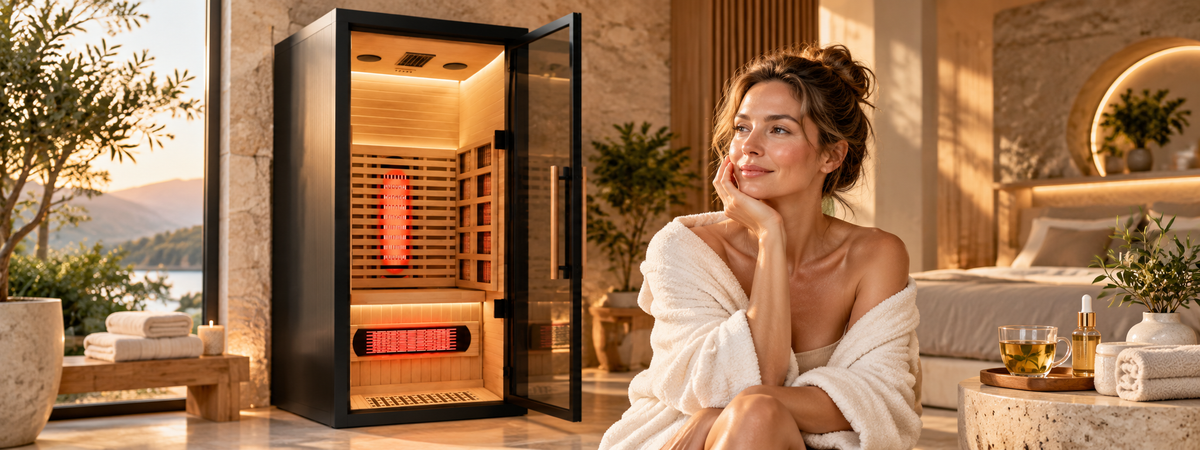
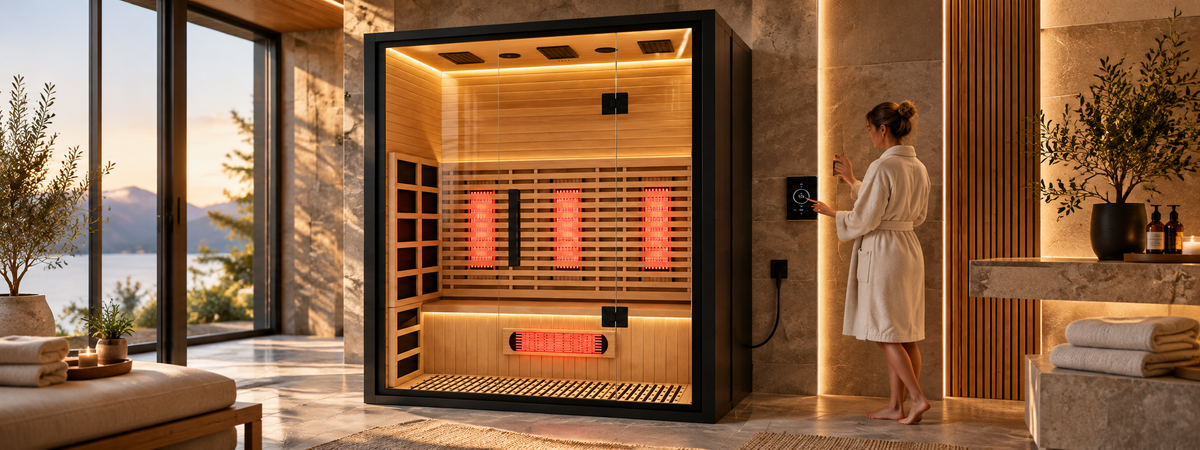
Understanding the heating mechanism helps you appreciate why the electrical requirements are what they are. The YardSauna Forest uses a surround full-spectrum heating matrix, which combines high-output quartz heaters with ultra-low EMF carbon panels. Quartz heaters emit near, mid, and far infrared wavelengths, providing deep tissue penetration and surface warmth. Carbon panels emit far infrared, which is gentler and more evenly distributed. Together, they create a complete surround-body warmth that is both efficient and comfortable.
The wide-format overhead red light and NIR array adds another layer of therapeutic light across all three seating spots. Red light and near-infrared (NIR) are not primarily for heating; they are for skin and cellular support, but they still consume electricity. The extended tourmaline floor heater warms the lower body and feet, which is often neglected in cheaper saunas. All these elements are controlled by a digital touch console that manages temperature, time, and lighting. The multi-speed fresh-air ventilation fan also draws a small amount of power.
Because the Forest is designed for three adults, its total wattage is higher than a 1- or 2-person sauna. More heating panels mean more current draw. The 60-inch wide bench seats three people, so the sauna must heat a larger volume and maintain that heat even when the door is opened. This is why a 240V circuit is necessary; a 120V circuit simply cannot deliver enough power to run all these components simultaneously without tripping a standard 15-amp breaker.
Low EMF and Electrical Safety
One of the selling points of the YardSauna Forest is its ultra-low EMF carbon panels. EMF stands for electromagnetic fields, which are generated by any electrical current. High EMF levels have been a concern for some sauna users, so manufacturers have developed shielding and wiring configurations that reduce EMF exposure. However, low EMF does not mean low voltage. The sauna still operates at 220V-240V, and the EMF shielding is an internal design feature, not a reason to skimp on the electrical installation.
Proper grounding is essential for both safety and EMF reduction. The dedicated circuit must include a ground wire, and the sauna's metal frame and heating elements must be bonded to that ground. A licensed electrician will ensure that the grounding is correct and that there is no stray current on the sauna's exterior. This is not a DIY task unless you have specific electrical training and a permit.
Common Mistakes to Avoid When Wiring a Home Sauna
Many homeowners make avoidable errors when planning their sauna's electrical setup. These mistakes can lead to poor performance, damaged equipment, or even house fires. Here are the most frequent pitfalls and how to avoid them.
1. Plugging a 240V sauna into a 120V outlet. This is the most common and most dangerous mistake. The sauna will not heat properly, and the internal transformer or control board may burn out. Always verify the voltage requirement before purchase and installation.
2. Using an undersized breaker or thin wire. If the breaker keeps tripping, some people replace it with a larger one without upgrading the wire. This is extremely dangerous because the wire can overheat inside the walls. The breaker, wire, and outlet must all be matched to the sauna's load.
3. Sharing the circuit with other appliances. Even if the other appliance is small, the combined load can exceed the breaker's rating. A dedicated circuit is mandatory for the YardSauna Forest. Do not tap into an existing dryer or oven circuit unless you are certain it is no longer used and the wire is properly sized.
4. Ignoring local code requirements for GFCI. Some jurisdictions require GFCI protection for saunas, especially in bathrooms or basements. Skipping this can fail inspection and create a shock hazard. Always check with your local building department.
5. Placing the sauna too far from the panel without upsizing wire. Long wire runs cause voltage drop, which reduces heater output and can cause the sauna to take longer to heat. If the distance is over 75 feet, consider using a thicker wire gauge.
6. Attempting DIY wiring without a permit. Electrical work for a new 240V circuit almost always requires a permit and inspection. Doing it yourself without proper training can void your homeowner's insurance and create a life-threatening hazard. Hire a licensed electrician.
Step-by-Step Guide to Preparing Your Electrical Setup
To make the process smooth, follow this ordered checklist before your YardSauna Forest arrives. This will help you avoid delays and extra costs.
- Choose the sauna location. Pick a dry, well-ventilated spot with enough clearance for the 60'W x 45'D x 75'H footprint. The location must be within reasonable distance of your electrical panel or a subpanel.
- Check your electrical panel capacity. A 240V circuit requires two adjacent breaker slots. If your panel is full, you may need a subpanel or a service upgrade. An electrician can assess this.
- Determine the required circuit size. Refer to the sauna's data plate or manual for exact amperage. If unknown, plan for a 30-amp circuit with 10-gauge wire as a safe default.
- Hire a licensed electrician. Get at least two quotes. Ask specifically about running a dedicated 240V circuit with a double-pole breaker, proper wire gauge, and any required GFCI.
- Obtain necessary permits. Your electrician will usually handle this, but confirm that a permit will be pulled and an inspection scheduled after the work is complete.
- Install the circuit before the sauna arrives. Having the wiring ready means you can assemble and use the sauna the same day it is delivered.
- Test the circuit with a multimeter. Before connecting the sauna, verify that the voltage at the junction box or outlet is between 220V and 240V and that the ground is properly connected.
Following these steps ensures that your sauna installation is safe, code-compliant, and ready for years of use. The YardSauna Forest is designed for easy assembly with tongue-and-groove modular panels that two adults can put together in 45-60 minutes, but the electrical connection should always be left to a professional.
Practical Tips for a Safe and Efficient Sauna Electrical Setup
Beyond the basics, these practical tips will help you get the most out of your sauna's electrical system and avoid common frustrations.
- Use a dedicated disconnect switch near the sauna. This allows you to cut power quickly in an emergency without going to the main panel. Many codes require a disconnect within sight of the appliance.
- Label the breaker clearly. Write 'Sauna' on the panel schedule so anyone can identify the circuit. This is especially helpful during maintenance or troubleshooting.
- Consider a surge protector. A whole-panel surge protector can safeguard the sauna's digital controls and Bluetooth module from power spikes. This is a small investment that prevents costly repairs.
- Keep the sauna away from water sources. While the Forest is not designed for wet locations, avoid installing it directly next to a shower or bathtub unless the area is properly protected and GFCI is in place.
- Ventilate the electrical compartment. The sauna's power supply and control board generate heat. Ensure that the ventilation openings are not blocked and that the room has adequate airflow.
- Schedule an annual inspection. Have an electrician check the connections, wire insulation, and breaker operation once a year. Loose connections are a leading cause of electrical fires.
- Do not modify the sauna's wiring. Any attempt to bypass the thermostat, add extra heaters, or change the voltage will void the warranty and create a serious hazard. Use the sauna exactly as designed.
Buyer Considerations: What to Look for in a 3-Person Infrared Sauna's Electrical Specs
When comparing infrared saunas, the electrical specifications are just as important as the wood type or heater configuration. Here is what to evaluate before you buy, using the YardSauna Forest as a benchmark.
Voltage compatibility. Does the sauna require 120V or 240V? A 120V sauna can plug into a standard outlet, but it will have lower heat output and longer warm-up times. A 240V sauna like the Forest delivers more power and heats faster, but it requires professional installation. If you want a true 3-person sauna with full-spectrum heating, 240V is the right choice.
Amperage draw. Check the manufacturer's listed amperage or wattage. This tells you the circuit size you need. A sauna that draws 15 amps can run on a 20-amp circuit, but one that draws 25 amps needs a 30-amp circuit. The Forest's total wattage is not published, but its multiple heating zones suggest a draw in the 15-20 amp range, making a 30-amp circuit a safe and future-proof option.
Dedicated circuit requirement. Some saunas claim to be plug-and-play, but any sauna over 1,500 watts should have a dedicated circuit. The Forest explicitly states 'dedicated circuit required,' which is a sign of a serious, high-performance unit. Avoid saunas that suggest sharing a circuit; that is a shortcut that compromises safety and performance.
Certification marks. Look for UL, ETL, CE, or ISO certifications. The YardSauna Forest is UL/ETL/CE/ISO 9001 certified, which means its electrical components have been tested for safety. Uncertified saunas may have substandard wiring, poor insulation, or incorrect grounding, which can be dangerous.
Heating technology. The type of heaters affects both the experience and the electrical load. Quartz heaters heat up quickly and draw high current initially, while carbon panels are more stable. The Forest's combination of quartz and carbon provides a balanced load and efficient operation. The ultra-low EMF design is an added benefit for those concerned about electromagnetic exposure.
When you choose the YardSauna Forest 3-Person Infrared Sauna, you are investing in a unit that is built for serious home use. Its 220V-240V dedicated circuit requirement is not a drawback; it is a feature that ensures consistent, powerful heating for three adults. With proper installation, you will enjoy the full benefits of the surround full-spectrum heating matrix, the wide-format red light and NIR array, and the extended tourmaline floor heater for years to come.
Real-World Example: A Typical Home Installation Scenario
Let's walk through a realistic scenario to illustrate the electrical planning process. Imagine you have a finished basement with a spare corner that measures 6 feet by 5 feet. You want to place the YardSauna Forest there. The basement is dry, with a concrete floor and a nearby GFCI outlet, but that outlet is on a shared 15-amp circuit with the basement lights.
First, you check your main electrical panel, which is in the garage, about 40 feet away. The panel has two empty slots, so you can add a double-pole breaker. You call a licensed electrician for a quote. The electrician recommends a 30-amp circuit with 10-gauge NM-B cable run through the basement ceiling joists to a junction box near the sauna location. The cost estimate is $600 to $900, including the breaker, wire, junction box, and labor, plus a $75 permit fee.
After the circuit is installed and inspected, you assemble the sauna in about an hour with a friend. The electrician returns to make the final hardwire connection, verifying 240V at the junction box and testing the ground. You turn on the sauna, and within 20 minutes it reaches 140°F. The digital touch console works perfectly, and the Bluetooth audio connects to your phone. The dedicated circuit means you can run the sauna for a full hour without any breaker trips or voltage drops.
This scenario shows that the electrical work is a one-time investment that pays off in reliable performance. The total cost of the sauna plus electrical installation is still far less than building a custom traditional sauna, and the ongoing energy cost is modest—typically $0.50 to $1.00 per hour of use, depending on your local electricity rates.
Pros and Cons of a 240V Infrared Sauna vs. a 120V Model
If you are on the fence about whether to choose a 240V sauna like the YardSauna Forest or a smaller 120V model, here is a balanced comparison to help you decide.
Pros of 240V saunas:
- Faster heat-up times, often reaching 140°F in 15-20 minutes versus 30-45 minutes for 120V models.
- More consistent temperature maintenance, even when the door is opened briefly.
- Ability to power multiple heating zones simultaneously, such as the Forest's surround matrix, overhead array, and floor heater.
- Better suited for 2-3 person saunas where the heat demand is higher.
- Often more energy efficient per unit of heat delivered because the higher voltage reduces current and resistive losses.
Cons of 240V saunas:
- Require professional electrical installation, which adds $500-$1,500 to the total cost.
- Not portable; the sauna is essentially a permanent fixture once hardwired.
- May require a permit and inspection, adding time and paperwork.
- If you move, you cannot simply unplug it and take it with you without hiring an electrician to disconnect it.
Pros of 120V saunas:
- Plug into a standard outlet, so no electrician is needed for basic operation.
- More portable and easier to relocate within the home.
- Lower upfront electrical cost.
Cons of 120V saunas:
- Limited to about 1,500 watts, which is insufficient for a true 3-person sauna with full-spectrum heating.
- Slower heat-up and less consistent temperatures.
- Often cannot run all heaters at once, so the experience is compromised.
For a dedicated home sauna that will be used regularly by multiple people, the 240V option is clearly superior. The YardSauna Forest's electrical requirements are a sign of its capability, not a burden. With proper planning, the installation is straightforward and the long-term benefits far outweigh the initial effort.
Expert Insights from a Sauna Industry Veteran
While this article focuses on electrical requirements, it is worth noting that proper sauna design goes beyond just wiring. A well-known Finnish sauna builder, in a candid video for sauna enthusiasts, emphasizes that many sauna projects fail because of overlooked fundamentals. One of his key points is that ventilation is critical—without proper airflow, the sauna becomes stuffy and uncomfortable, and humidity can lead to mold and decay. Although his advice is aimed at traditional sauna builders, the principle applies to infrared saunas as well. The YardSauna Forest includes a multi-speed fresh-air ventilation fan, which addresses this concern directly. However, the room where you place the sauna should also have some natural ventilation to prevent moisture buildup.
Another insight from the same expert is about temperature sensor placement. In electric saunas, the sensor must be positioned correctly to ensure accurate temperature control. For infrared saunas, the sensors are typically built into the control system, so this is less of a user concern. Still, it underscores the importance of following the manufacturer's installation instructions precisely. The Forest's digital touch console manages all heating zones, so as long as the electrical supply is stable, you can expect consistent performance.
These expert tips reinforce the idea that a successful sauna installation is a combination of proper electrical work, good ventilation, and correct placement. By choosing a certified unit like the YardSauna Forest and hiring a qualified electrician, you cover the most critical bases.
Remember: the circuit breaker is your last line of defense. Never oversize it beyond the wire's capacity, and never bypass it. A dedicated 240V circuit with the correct breaker and wire gauge is the foundation of a safe and enjoyable sauna experience.
Checklist for a Smooth Sauna Electrical Installation
Use this checklist to ensure you have covered every aspect of the electrical installation for your YardSauna Forest. Print it out and check off each item as you complete it.
- Verify the sauna's voltage requirement: 220V-240V, dedicated circuit.
- Confirm your electrical panel has space for a double-pole breaker.
- Determine the required amperage from the sauna's data plate or manual.
- Select the appropriate wire gauge: 12-gauge for 20A, 10-gauge for 30A.
- Choose the correct breaker: double-pole 20A or 30A, GFCI if required by code.
- Hire a licensed electrician and obtain a written quote.
- Apply for an electrical permit if required by your municipality.
- Schedule the circuit installation before the sauna delivery date.
- Test the circuit voltage and ground before connecting the sauna.
- Keep the sauna's manual and warranty information in a safe place.
Completing this checklist will give you peace of mind and ensure that your sauna operates safely from day one. The YardSauna Forest is a premium product that deserves a premium installation.
Why the YardSauna Forest Is the Right Choice for Your Home
When you invest in a home sauna, you want a unit that delivers on its promises. The YardSauna Forest 3-Person Infrared Sauna stands out for several reasons that directly relate to its electrical design. First, its 220V-240V dedicated circuit requirement means it has the power to run a true full-spectrum heating system. Unlike smaller saunas that compromise on heat output, the Forest's surround heating matrix, overhead red light and NIR array, and extended tourmaline floor heater all operate simultaneously to provide complete, even warmth for three adults.
Second, the Forest is built from 100% non-toxic Canadian Hemlock, which is not only beautiful but also durable and resistant to warping. The panoramic tempered glass front wall adds a sense of space and luxury, while the digital touch console and Bluetooth audio make the experience modern and convenient. The multi-speed fresh-air ventilation ensures that you never feel stuffy, even during long sessions.
Third, the Forest is certified to UL, ETL, CE, and ISO 9001 standards. This means its electrical components, wiring, and safety features have been independently tested. When you combine this with a properly installed dedicated circuit, you have a sauna that is as safe as it is enjoyable. The assembly is straightforward with tongue-and-groove modular panels, so you can have it ready in under an hour—after the electrician has done their part.
If you are ready to bring the spa experience home, the YardSauna Forest 3-Person Infrared Sauna is a smart investment. Its electrical requirements are clear and manageable with professional help, and the payoff is a personal wellness retreat that you can enjoy every day. Plan your circuit, hire a qualified electrician, and get ready to relax in the deep, penetrating warmth of full-spectrum infrared.
On-Camera Walkthrough: Sauna Installation Insights from a Finnish Expert
For a deeper understanding of what makes a great sauna installation, this video walkthrough offers brutally honest advice from a Finnish sauna builder with years of industry experience. He covers the most common mistakes he sees in sauna projects, starting with the critical issue of ventilation. Without proper airflow, a sauna can become uncomfortable and even unsafe, as humidity builds up and leads to mold. His practical tips on creating proper air exchange are valuable for anyone planning a home sauna, whether traditional or infrared.
The video also addresses the correct placement of temperature sensors in electric saunas, a detail that many DIY builders get wrong. While infrared saunas like the YardSauna Forest have integrated sensors, the underlying principle of accurate temperature control applies to all sauna types. The expert's straightforward, no-nonsense approach will help you avoid costly errors and ensure your sauna performs at its best for years to come.
Brutally Honest Advice for Sauna Builders - key mistakes to avoid
Final Thoughts on Sauna Electricity Requirements
Installing a home infrared sauna is a project that requires careful planning, especially when it comes to electricity. The YardSauna Forest 3-Person Infrared Sauna is a high-performance unit that demands a 220V-240V dedicated circuit, and for good reason. Its full-spectrum heating system, overhead red light array, and floor heater simply cannot operate safely or effectively on a standard 120V outlet. By understanding the voltage, amperage, outlet type, and breaker recommendations, you can prepare your home properly and avoid common pitfalls.
Remember that the information in this article is for informational purposes only. Always consult a licensed electrician and your local building codes before beginning any electrical work. With the right preparation, your YardSauna Forest will provide years of relaxing, rejuvenating warmth for you and your family. Make the investment in a dedicated circuit, and you will never have to worry about tripped breakers or inconsistent heat again.
Frequently Asked Questions
1. What voltage does the YardSauna Forest require?
The YardSauna Forest requires 220V-240V on a dedicated circuit. It cannot be plugged into a standard 120V outlet. You will need a double-pole breaker and professional installation.
2. Can I plug the YardSauna Forest into a regular wall outlet?
No, the Forest is not designed for 120V operation. Attempting to use an adapter or extension cord is dangerous and will damage the sauna. A dedicated 240V circuit is mandatory.
3. What size circuit breaker do I need for the Forest?
A 20-amp double-pole breaker is the minimum, but a 30-amp breaker with 10-gauge wire is recommended for safety and headroom. Check the sauna's data plate for exact amperage.
4. Do I need a GFCI breaker for my sauna?
It depends on your local electrical code and the sauna's location. Many jurisdictions require GFCI protection for saunas in bathrooms or basements. Consult your electrician.
5. Can I share the sauna circuit with other appliances?
No, the YardSauna Forest requires a dedicated circuit. Sharing the circuit can cause breaker trips, voltage drops, and potential fire hazards. Nothing else should be on that breaker.
6. How far can the sauna be from the electrical panel?
There is no strict limit, but longer runs require thicker wire to prevent voltage drop. For runs over 75 feet, you may need to upsize the wire gauge. Your electrician can calculate this.
7. Is hardwiring required, or does the Forest come with a plug?
The Forest is typically hardwired to a junction box. Some units may have a NEMA plug, but hardwiring is the most common and code-compliant method. Check your specific unit upon delivery.
8. How much does it cost to install a 240V circuit for a sauna?
Costs vary by region and complexity, but expect to pay $500 to $1,500 for a licensed electrician to run a dedicated circuit, including the breaker, wire, and labor. Permits may add extra.
9. Can I install the electrical circuit myself?
Unless you are a licensed electrician, it is strongly advised against. Electrical work requires a permit and inspection in most areas. Improper installation can void your insurance and create serious hazards.
10. What wire gauge is needed for a 30-amp sauna circuit?
For a 30-amp circuit, use 10-gauge copper wire. For a 20-amp circuit, 12-gauge is sufficient. Never use smaller wire than the breaker rating allows.
11. Does the YardSauna Forest use a lot of electricity?
While it draws significant power during operation, typical usage costs about $0.50 to $1.00 per hour, depending on local rates. The full-spectrum heating is efficient for the heat delivered.
12. What certifications does the Forest have for electrical safety?
The YardSauna Forest is UL, ETL, CE, and ISO 9001 certified. These certifications ensure that its electrical components meet rigorous safety standards.
For more on low-EMF home infrared saunas and the models we offer, visit yardsauna.com.
This article is for informational purposes only and does not constitute medical advice. Always consult a qualified healthcare provider before starting any new wellness routine, especially if you have pre-existing conditions or are pregnant.